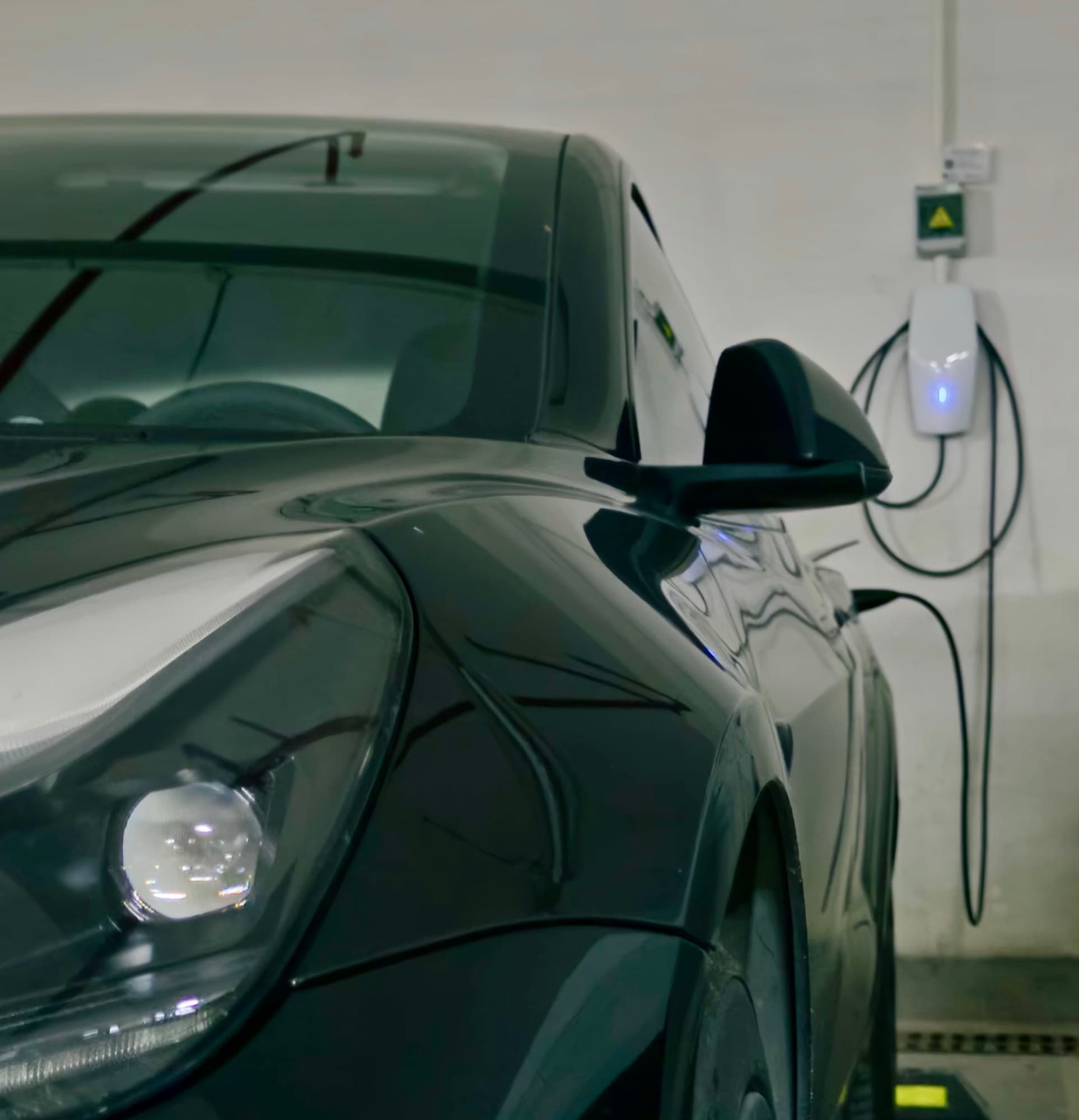
Tesla home charging requires a dependable parking space, enough available electrical capacity, correctly selected charging equipment, a safe cable route, and an installation that meets local electrical and permitting rules. You do not automatically need the highest-power circuit or a new electrical panel.
What You Actually Need
Treat home charging as a small electrical project built around the place where the car sleeps. Before buying hardware, confirm these six requirements:
- A regular parking position where the car can remain connected for several hours.
- An electrical capacity assessment based on the home's existing loads and service.
- A compliant circuit or approved outlet selected for sustained EV charging.
- Charging equipment that matches the vehicle and local connector standard.
- A protected cable route that reaches the charge port without tension or a trip hazard.
- Any required permission, permit, inspection, and commissioning.
That list matters more than chasing the largest amperage number. The right installation reliably replaces your normal daily driving while the car is parked, without overloading the property or making the cable annoying to use.
Tesla's current Home Charging guide recommends choosing equipment from the vehicle, daily driving, and regular parking situation, then consulting an installer. Products, connectors, electrical standards, and installer requirements vary by market, so use Tesla's local support page and the current manual for the equipment sold where the installation will occur.
Start With the Parking Space
The electrician needs to see the real parking arrangement, not just a picture of the electrical panel. Park the Tesla in its normal position and identify the charge-port location. Then check whether the proposed equipment location works when the car is parked forward, backward, or beside another vehicle.
A good location should let you:
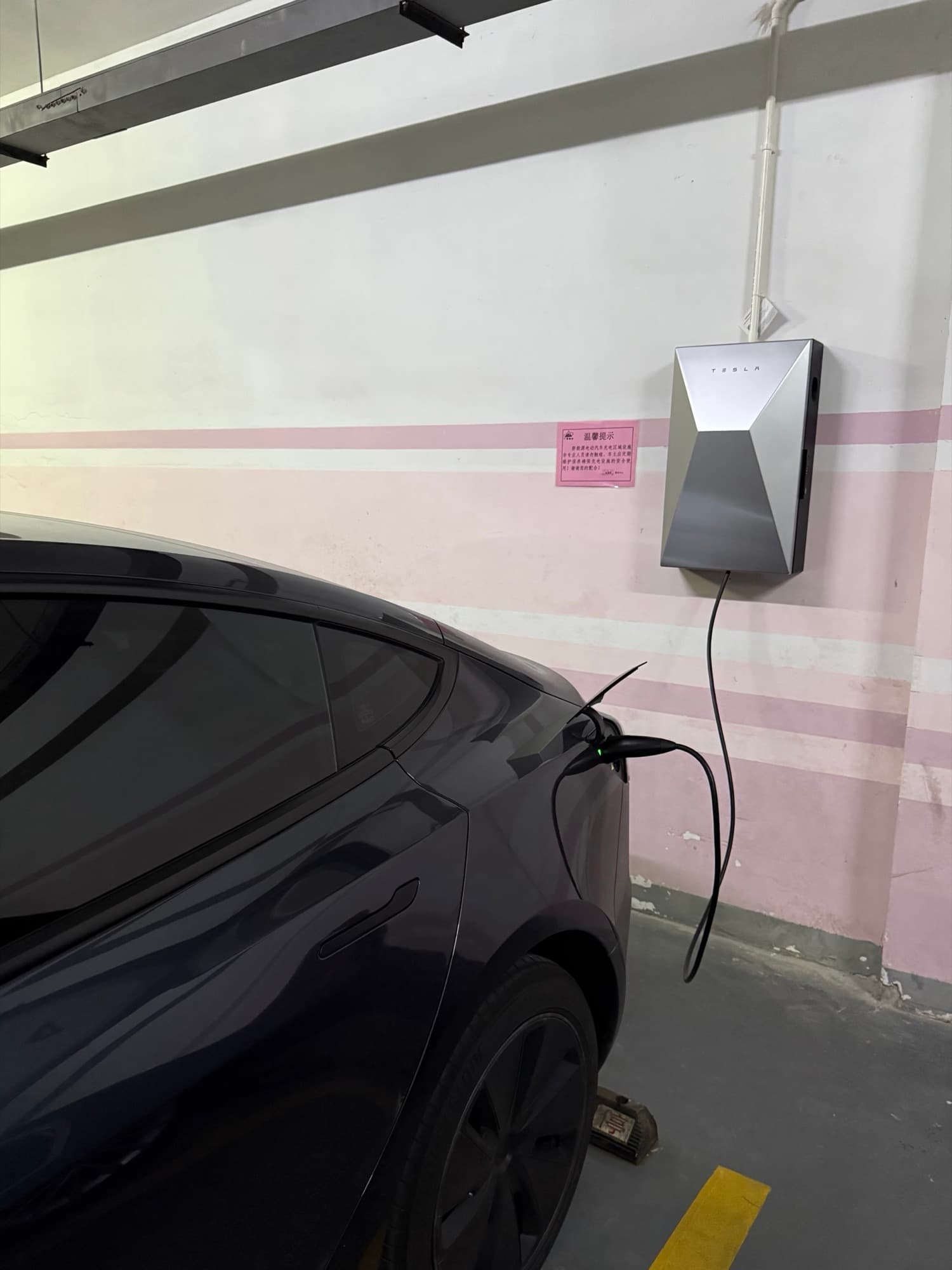
- reach the charge port with slack in the cable;
- keep the connector and excess cable off the floor;
- avoid running the cable across a walkway or vehicle path;
- open doors and storage areas normally;
- protect the unit and cable from impact, standing water, sharp edges, and unnecessary sun or weather exposure; and
- maintain Wi-Fi coverage if the chosen equipment uses connected features.
The shortest electrical run is not always the best daily-use location. Saving a little installation work can become irritating if the cable must be stretched around the car every evening.
Electrical Capacity Comes Before Charger Size
An EV charger is a significant sustained electrical load. A qualified electrician should assess the service, panel, existing household loads, circuit space, conductor route, grounding or earthing arrangement, protective devices, and the rules that apply to the property.
This assessment answers three separate questions:
Can the property support charging now?
The panel may have an open breaker position but still lack enough usable capacity for the proposed charging load. Conversely, a visually full panel does not by itself prove that an expensive service upgrade is necessary. The decision requires a proper load calculation and site inspection.
How much charging power is useful?
Estimate what the car normally uses between parking sessions and how long it stays parked. If the Tesla sits for ten hours most nights, a moderate charging rate may recover the daily energy comfortably. Higher power becomes more useful with heavy daily driving, short parking windows, multiple EVs, or irregular schedules.
Tesla says its current Wall Connector can be configured at different power levels, and its Wall Connector support page provides vehicle-specific charging tables. The maximum rate is limited by the circuit, charging equipment, vehicle's onboard charger, and operating conditions. Confirm the exact vehicle rather than using a headline maximum.
Can power management avoid an upgrade?
Where the electrical supply is constrained, supported load-management features may allow charging power to be limited or adjusted around other household demand. Tesla describes static, dynamic, and group options on its Wall Connector Power Management page. Availability, meters, commissioning, and approval differ by market, so the installer must verify whether a particular solution is permitted and appropriate.
Practical Steps Before Installation
- Record your normal driving and parking time. Use an ordinary week, not only the longest road trip you might take once a year.
- Photograph the panel and proposed route. Include the parking space, walls, doors, distance, and any outdoor or shared areas, but do not treat photos as a substitute for an on-site assessment.
- Ask for a load assessment. Have a qualified electrician determine the available capacity and the compliant circuit, protection, and installation method.
- Choose the equipment after the assessment. Match the connector, vehicle, useful power, cable length, environment, and any future second EV.
- Compare complete quotes. Check whether equipment, wiring, trenching, wall repair, pedestal work, permits, inspection, commissioning, tax, and warranty are included.
- Get property approval where required. Rental homes, apartments, condos, and shared parking may need written permission, metering, access control, or an agreed method for paying for electricity.
- Test before sign-off. Connect the car, confirm the commissioned current, check for alerts, verify app or scheduling functions, and make sure the cable stores safely.
Wall Connector, Mobile Connector, or Existing Outlet?
Wall Connector
A permanently mounted unit is often the cleanest choice for a fixed parking space. Tesla currently lists connected features such as scheduling, charging statistics, access control, firmware updates, and remote diagnostics for supported Wall Connector installations. It can also be commissioned below its maximum output when the site or vehicle does not need the full rate.
The installation cost depends less on the box itself than on the electrical route and property work. A long conductor run, trench, pedestal, new panel, concealed wiring, or difficult permit can matter more than the hardware price.
Mobile Connector and an approved outlet
A portable connector may be enough when daily driving is modest and a suitable outlet already exists. It can also be useful for travel or as a backup. But "there is an outlet near the car" is not an installation assessment.
The electrician should confirm the receptacle, wiring, circuit, protection, condition, mounting, adapter, and suitability for repeated charging. Do not solve reach problems with an ordinary extension lead or an improvised adapter. Stop using equipment that becomes damaged, unusually hot, loose, discolored, or produces a charging alert, and follow the current equipment manual.
Third-party charging equipment
A Tesla can use compatible third-party equipment where the connector, adapter, electrical rating, and local certification are correct. This can make sense in a mixed-EV household. Verify the exact vehicle inlet and regional standard because Tesla charging connectors are not identical worldwide.
Requirements That Change by Property
Detached home
The main decisions are usually available capacity, panel-to-parking distance, indoor or outdoor routing, and whether future loads should be considered. Ask the installer to separate essential work from optional upgrades in the quote.
Apartment, condo, or shared garage
Ownership approval may be as important as electrical capacity. Clarify who owns the wall and parking space, who pays for installation and electricity, how usage is measured, who can access the charger, and who is responsible for future repair or removal.
Outdoor parking
The equipment and every part of the installation need the appropriate environmental rating and local approval. Placement should account for drainage, impact protection, cable storage, snow or debris where relevant, and how people move through the area. The installer's current product manual governs clearances and mounting details.
Two-EV household
Do not assume two cars require two independent maximum-power circuits. Tell the installer about both vehicles and their schedules. Supported group power management or a shared strategy may fit the actual need better than immediately upgrading the service.
Questions to Put in the Installation Quote
Ask each installer to state the same items so the quotes are comparable:
- What charging output is proposed, and why is it enough for the stated daily use?
- Was the property's available capacity calculated?
- Is a panel or service upgrade required, optional, or avoidable with approved power management?
- Which equipment, connector, cable length, and mounting position are included?
- Are permits, inspection, commissioning, and testing included?
- Are trenching, wall repair, pedestal work, or cable concealment excluded?
- Who registers the charger and connects it to Wi-Fi or the Tesla app?
- What installation and workmanship warranty applies?
- What would change if a second EV is added later?
Tesla notes that a typical certified-installer quote may include professional installation, materials, permit, inspection, and an installation warranty, while longer runs, trenching, extra panels, service upgrades, pedestals, and concealed wiring can be additional. Treat that as a quote checklist, not a universal promise; local practice controls the final scope.
Tesla-Specific Recommendations
Check the exact Tesla's maximum AC charging current from the vehicle interface or current owner documentation. Different models and configurations can have different onboard limits, so installing more circuit capacity does not guarantee that the car will charge faster.
After installation:
- register and commission supported equipment as required;
- connect the Wall Connector to compatible Wi-Fi when connected functions are desired;
- use the charge limit recommended on the exact vehicle's touchscreen or Tesla app;
- confirm charging has started before leaving the car; and
- keep the connector and cable stored without tight bends or vehicle pressure.
Software, equipment features, and battery guidance can change. Confirm them in Tesla's current local support material and the in-car manual rather than relying on an old installation video.
Owner Notes
- What I would arrange first: the site and load assessment, because it determines whether the planned hardware and power level make sense.
- What I would prioritize: a short, protected cable route that makes plugging in easier every day.
- What I would delay: cosmetic covers and cable accessories until the equipment position is final.
- What new owners often get wrong: buying the highest-output charger before checking the vehicle limit, daily energy need, panel capacity, and complete installation cost.
If I Were Buying Again
I would park the car in its real position, show the electrician the complete cable route, and get a written capacity assessment before ordering equipment. I would pay for enough reliable overnight charging and a tidy installation, not maximum power simply because it is available on a specification sheet.
FAQ
Do I need a Tesla Wall Connector to charge at home?
No. Tesla supports home charging with a Mobile Connector and a suitable outlet in supported markets, but a Wall Connector can provide a cleaner permanent installation and additional connected features. Confirm the equipment and plug standard for your vehicle and region.
Does my electrical panel need an upgrade for Tesla charging?
Not necessarily. An electrician must calculate the property's available capacity and assess the existing panel. A lower-power circuit or approved power-management solution may avoid an upgrade when it still meets your daily charging need.
Can I use an existing outlet for Tesla home charging?
Possibly, if the outlet, circuit, wiring, protection, adapter, and local installation rules are suitable for sustained EV charging. Have a qualified electrician inspect it instead of assuming that an outlet used by another appliance is ready.
How much electrical power do I need for home charging?
You need enough power to replace normal daily driving during the hours the car is parked, not automatically the charger's maximum output. The vehicle, charging equipment, electrical supply, and local rules determine the final circuit and charging rate.
Should I buy the charger before getting an installation quote?
Usually, get the site assessment first. The installer can confirm the correct connector, power level, cable route, weather rating, permits, and whether the equipment can be included in the quote.